Ralph Herdman
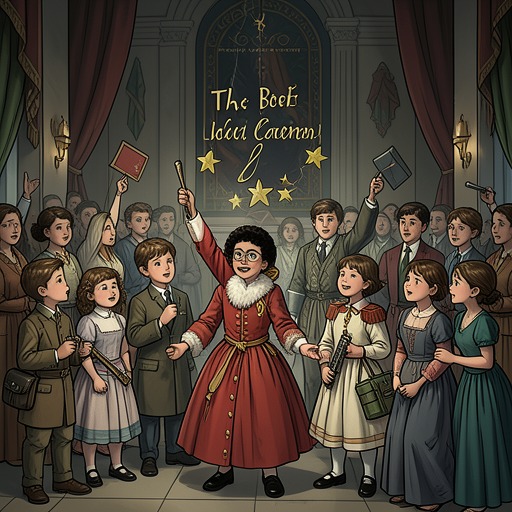
The Best Christmas Pageant EverRalph Herdman is one of the six Herdman children, whose rough reputation shapes how the community expects them to behave. His part in the Christmas pageant brings that expectation into contact with the familiar Nativity story: he claims the role of Joseph, reacts plainly to the Bible’s description of Mary, and appears beside Imogene Herdman in a staging that makes the story feel newly immediate to the narrator.
Identity and Introduction
Ralph is one of six siblings—Ralph, Imogene Herdman, Leroy Herdman, Claude Herdman, Ollie Herdman, and Gladys Herdman—presented together as skinny, stringy-haired children marked by bruises from knocking into one another. The group description makes physical roughness part of the family’s first impression, rather than distinguishing Ralph by a private history or individual motive. His later behavior in the pageant is consistent with that blunt introduction, but the evidence also shows him taking part in a communal religious performance rather than simply fulfilling the role assigned to the Herdmans by their reputation.
Choosing Joseph
At a Sunday-school discussion of the Christmas pageant roles, Alice Wendleken sits silently, chewing her hair and looking down. When Imogene raises her hand, she does not ask a question: she says that she wants to be Mary and that Ralph wants to be Joseph. Ralph confirms the choice. Their self-selection catches the adults and other children off guard; the narrator’s mother can only stare in disbelief. Ralph’s brief assent establishes him as a willing participant, though the scene gives no further explanation of why he wants the role.
Reacting to the Christmas Story
Before assigning the cast its usual positions, the narrator’s mother begins by reading the biblical account, which the experienced pageant children already know by heart. When she reads that Mary was “great with child,” Ralph interrupts with the word “Pregnant!” His outburst sets off giggling among the older children and questions from the younger ones, forcing the mother to hammer the floor with a blackboard pointer before continuing. Alice Wendleken whispers that it is not nice to describe Mary that way, underscoring the contrast between her decorum and Ralph’s direct response to the text.
Ralph’s interruption also exposes how the children’s familiarity with the pageant has made its story feel routine: they are accustomed to learning their parts and places, not reconsidering its language. His blunt naming of pregnancy breaks through that rehearsed distance. The episode does not show him intending a challenge to the story; its effect is to make the Nativity’s physical circumstances newly noticeable to the assembled children.
Performing as Joseph
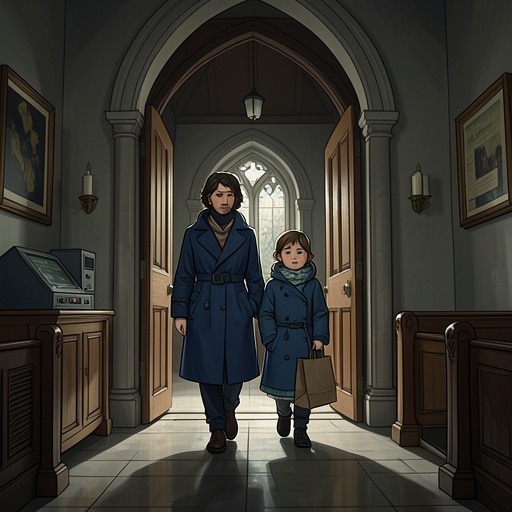
At the pageant, Alice fears that Ralph and Imogene have failed to arrive and worries that there will be no Mary and Joseph. They are present, but instead of pushing through the door and jostling one another as usual, they pause in the candlelit, crowded church, seeming unsure that they belong there. Ralph’s hair sticks out around his ears, and Imogene’s veil sits crookedly. The narrator sees in them an echo of a displaced family waiting in an unfamiliar place, and imagines that the real Holy Family, too, would not have looked neat and tidy.
Imogene carries the Baby Jesus doll slung over her shoulder, thumps it twice on the back, and then puts it in the manger. Alice objects in a whisper to the apparent burping; the narrator replies that the baby could have been fussy, hungry, or suffering from colic. Ralph’s presence as Joseph is part of this rough-edged tableau, which shifts attention away from polished pageant convention and toward the vulnerability of a real newborn and the family around him. The evidence does not describe Ralph’s private response, but his participation helps make the familiar role look less like a carefully managed performance and more like an encounter with the circumstances of the story.